European study Review and lessons learned from two years of crisis management at European borders October 2022 The MOT study for DG REGIO assesses two years of pandemic-related border management and its impact on border regions; and makes recommendations for future management, also taking into account the current revision of the Schengen Borders Code. It updates the report "The effects of COVID-19 induced border closures on cross-border regions," published in January 2021.
European study What have been the impacts of border restrictions on citizens? February 2021 In July 2020, the MOT was tasked by DG REGIO to conduct an empirical analysis of the effects of the restrictions imposed by governments in the first wave of the pandemic (March-June 2020) on the inhabitants of border regions. In order to carry out this assignment, the contributions received by members of the MOT network were analysed and, with the help of its European partners (CESCI and the AEBR), more than twenty players on other European borders were questioned. The resulting study, entitled “The effects of COVID-19 induced border closures on cross-border regions”, is now available.
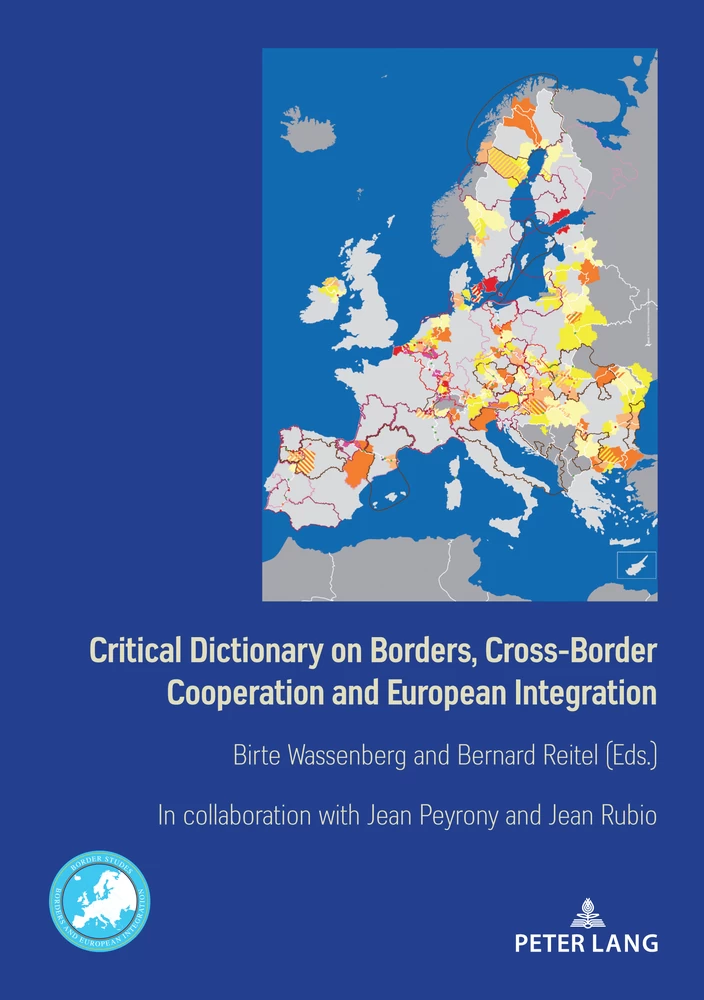
Scientific article / Dictionary Critical Dictionary on Borders, Cross-Border Cooperation and European Integration October 2020 Peter Lang, by Birte Wassenberg (Volume editor) Bernard Reitel (Volume editor) History & Political Science, Series: Border Studies, Volume 1. The "Critical Dictionary of Borders, Cross-Border Cooperation and European Integration" has just been published: a major publication that contains 209 articles written by 124 authors from different countries and academic disciplines, accompanied by 66 original maps produced by the MOT. Its aim is to answer the following questions: what is the role of borders in European integration? How does cross-border cooperation function concretely in the EU’s border regions? Does it contribute to European integration? Who are the players, and what are their motives, objectives and tools?
European study Building Legal Provisions to Overcome Obstacles to Cross-border Cooperation September 2015 The second component of the work conducted by MOT within the framework of the Luxembourg's presidency of the EU Council, provides an analysis of the creation of a legal tool that would be governed by a European regulation - which would allow local authorities, faced with a legal obstacle in the context of a cross-border project, to propose to their respective States a specific legal framework.
European study Cross-border economic development: Practical guide September 2015 In the framework of a EU project, the MOT published two handbooks aimed at project developers and stakeholders involved in cross-border economic development. A 40-page practical guide gives players methodological tools and practical advice aimed at helping them to establish partnerships and set up projects. Conducted in the framework of the Europ’Act technical assistance programme
European study Cross-border economic development: Introduction to the topic September 2015 In the framework of a EU project, the MOT published two handbooks aimed at project developers and stakeholders involved in cross-border economic development. An Introduction to the topic (132 pages), accompanied by ten illustrative project factsheets, sets out the cross-cutting issues and analyses nine European borders. This document also contains recommendations that help players take greater advantage of the potential for the economic development of cross-border territories. Conducted in the framework of the Europ’Act technical assistance programme.
European study Cross-border Cooperation : Obstacles to Overcome May 2015 In the framework of its presidency of the EU Council in the second half of 2015, the Grand-Duchy of Luxembourg placed the clearing of obstacles to cross-border cooperation at the centre of its priorities. A member of the MOT, the Grand-Duchy commissioned it to produce an analysis of the legal obstacles preventing or threatening the implementation of cross-border projects, along with potential solutions that might involve the introduction of a new European legal instrument.
Position statement / Manifesto Assessment on territorial impacts (CoR) March 2013 Contribution of MOT to the questionnaire "Assessment on territorial impacts", Committee of the Regions, 2013.
European study Methodological Guidebook : “Articulate cohesion policy, governance structures and cross-border territorial approaches” Conducted in the framework of the Europ’Act technical assistance programme, by the MOT and the DATAR. November 2012 This methodological guidebook published by the MOT with the DATAR in the framework of the project is intended to better articulate cohesion policy, governance structures and cross-border territorial approaches. Its 156 pages include a cross-cutting diagnosis of cooperation on each French border and 25 pages of recommendations.
Thematic notebook N°7 – The European Grouping of Territorial Cooperation (EGTC) May 2008 The EGTC is the instrument of European territorial cooperation. The EGTC has been introduced notably to manage European territorial cooperation projects and programmes. The use of the EGTC aims to promote cross-border, but also transnational and interregional, cooperation actions on the internal and external borders of the territory of the European Union, in order to reinforce economic and social cohesion. It provides a novel framework for cooperation actions which could not be based on the legal framework of cross-border cooperation.
European study Practical Guide to transfrontier cooperation March 2006 The present Practical Guide on Transfrontier Cooperation was drafted by the Transfrontier Operational Mission (MOT) for the Council of Europe. This Guide drafted for Council of Europe member States describes the legal framework for transfrontier cooperation and highlights a number of good practices and methodologies aiming at implementing transfrontier cooperation actions between territorial and local authorities located on the territory of the Council of Europe member States.